The Urban Agenda for the EU, its ‘Green’ Actions and the European Green Deal
Slovenia (virtual) - 18 March 2021
Joint organiser: Ministry of the Environment and Spatial Planning of Slovenia
In a series of tailored EUKN activities to support Slovenia’s preparation for its 2021 EU Council Presidency, this Policy Lab focused on the European Green Deal (EGD)’s urban dimensions and its connection with the ‘green’ Partnerships of the Urban Agenda for the EU (UAEU).
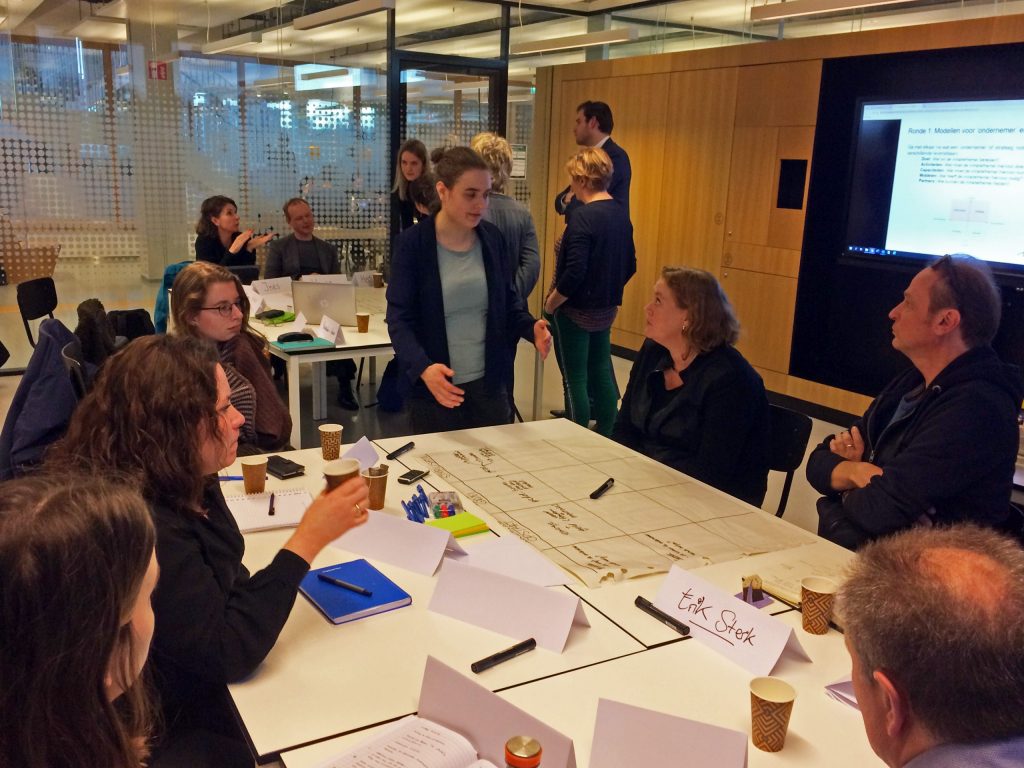
An expert-led panel discussion contextualised the UAEU’s ‘green’ actions both politically and institutionally, highlighting European cities’ commitments and achievements regarding the EGD and UAEU Partnerships. Three interactive Working Groups then gave participants a platform to discuss the regulatory obstacles cities face in achieving environmental goals, and overcoming these barriers.
Panel insights
Anthony Agotha, Senior Diplomatic Expert, European Commission
To fully leverage the EGD, Mr Agotha called on the UAEU Thematic Partnerships, and especially cities, to connect and share knowledge and practices, in order to create high-quality EGD programme proposals. He also highlighted that the EGD was only actionable via integrating social justice, noting Executive Vice-President Frans Timmermans’ initial remark: ‘This will be a just transition, or there just will be no transition.’
Vanesa Castán Broto, Professor for Climate Urbanism, University of Sheffield
Ms Castán Broto recognised the EGD as a future strategy, but expressed concern about its root rationale – pursuing economic growth – and reducing possible futures to one narrative. Highlighting that urban interventions have unequal impacts, she supported EGD implementation with an equity-focused approach, including diverse views on ‘value’ in urban environments to ensure just outcomes.
Jan Olbrycht, Member of the European Parliament
The MEP stressed the need for concrete actions to evolve the UAEU, motivating cities and regions to participate. In his view, declarations like the New Leipzig Charter are key to define common goals, but these need to be translated into specific practices through UAEU Partnerships, practical Action Plans and multi-level cooperation and governance. He noted that, as the UAEU shows, the urban dimension extends beyond Cohesion Policy to all EU policies, as in the EGD’s horizontal strategy.
Kieran McCarthy, European Committee of the Regions
Mr McCarthy reminded Policy Lab participants of the often-unnoticed impressive achievements of the voluntary Partnerships, which he felt should be better communicated to citizens. While noting the disconnect between the UAEU’s ‘non-green’ and ‘green’ aspects, he was positive about cities’ commitment to become ‘greener’.
To him, the Fit for 55 Package is a welcome example of the UAEU’s BR strand.
Louise Coffineau, Policy Advisor, Eurocities
With numerous examples of their climate neutrality commitments, Ms Coffineau clarified that cities are sustainable digital transition leaders, posing that the EGD is an investment-driving enabler. For the future UAEU, she suggested the European Commission and Member States continue collaborating with cities, which need support to reach their objectives. More active involvement of the Commission’s Directorate-Generals and more resources would also develop stronger and more progressive UAEU governance.
Working Group takeaways
Supporting cities to implement Nature-Based Solutions
Working Group 1
The experts shared and discussed their experiences with ‘greening’ existing strategies as well as with contributing to NBS-related platforms within large research and innovation projects. The session touched upon case studies from Bologna, Slovenia, as well as the EU Horizon 2020 funded projects CLEVER Cities, CONEXUS, NetworkNature and NATURVATION, among others. Working Group 1 concluded that Nature-Based Solutions should be approached in an integrated way, and considered a tool, not a goal. They should become more visible, and target specific audiences based on their contributions to society.

Creating the conditions to boost circular economy in cities
Working Group 2
The concept of ‘Urban Resource Centre’ was introduced and further explored through the examples of Olso’s mini recycling stations and the Rediscovery Centre in Dublin. Representatives of the Slovene cities of Ljubljana and Maribor also shared their experiences to boost the Circular Economy in cities. Working Group 2 identified strategies for overcoming legal barriers to circular economy implementation, such as influencing legislation, strategic adjustment to existing hurdles, and launching initiatives as pilot projects. Inclusivity, visibility, continuity and positivity were stressed as crucial factors to incentivise participation.

Achieving Better Regulation through the Urban Agenda for the EU
Working Group 3
Working Group 3 acknowledged the UAEU Partnerships’ identification of relevant legal frameworks for urban issues, but emphasised that Better Regulation (BR) actions lacked focus on improving EU legislation. Resulting advice included developing a lobbying strategy to influence legislation, approaching BR via multi-level governance, and directly linking future BR actions to EU policy and legislation.

Related EUKN activities


More articles

Luca de Stefano on… urban design in the context of pandemics...
Luca de Stefano on… urba...
Luca de Stefano on… urban design in the context of pandemics
'Like every young designer, we wanted to change the world. We believed our collective impact could be much bigger than one guy designing beautiful museums. And that was how Non-Architecture was born.'

Geert Brinkman on… embracing complexity through design...
Geert Brinkman on… embra...
Geert Brinkman on… embracing complexity through design
Geert Brinkman elaborates on the value of design as a tool to enhance the problem-solving capacity of public organizations, face complexity and respond to the wicked problems of our time.